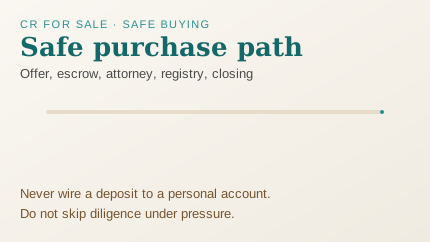
Short answer: You can buy Costa Rica real estate safely by hiring an attorney who represents only you, placing every deposit in a SUGEF-regulated escrow account (never a personal bank account), and finishing a real due-diligence file—title, survey, water, permits—before funds are released. Title passes when the deed is recorded at the Registro Nacional, not when you shake hands.
Foreign buyers ask me the same thing almost every week: Is it safe? The honest answer is yes—if you treat the purchase like a serious file instead of a vacation handshake. Costa Rica has a public National Registry, a regulated escrow market, and a notarial closing system that works. The trouble starts when someone skips those tools.
I have closed deals on this coast for more than sixteen years with RE/MAX Ocean Surf, based in Tamarindo and Playa Flamingo. What follows is the practical safety path I walk buyers through. It is general information, not legal advice. Confirm every step with your Costa Rican attorney.
The Safe Purchase Path in Five Steps
1. Put the deal in writing
A clean purchase starts with a written offer that becomes a purchase agreement. The useful agreements name the price, the deposit, the conditions that let you walk away, and a closing date. Market custom on this coast often puts the deposit near 10 percent in escrow. That figure is custom, not a statute—your contract controls.
Do not send a “reservation” wire to a seller, a developer’s operating account, or anyone’s personal bank account because “that is how we do it here.” That sentence is how buyers become unsecured creditors.
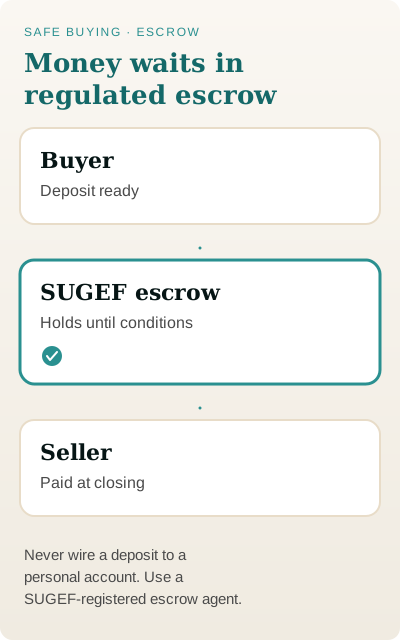
2. Park the money in regulated escrow
An escrow agent registered with SUGEF (Costa Rica’s financial regulator) holds your funds and releases them only when the written conditions are met. On purchases I handle, the escrow minimum is about $900, and the fee scales with the deal. Get the quote in writing.
Escrow is the market standard for a reason. It keeps the transfer of money and the transfer of title on the same track. Waiving it to “save a fee” is rarely worth the risk.
Related reading on the site: closing costs in Costa Rica and steps to buy a home in Guanacaste.

3. Hire an attorney who represents only you
Costa Rica requires a notary—an attorney with notarial authority—to authorize the public deed. That role is not the same as having a lawyer whose only client is you.
Hire independent counsel who does not also act for the seller, the listing agent, or the developer. Your attorney’s job is to be slightly skeptical on your behalf: to test the title, the survey, the water letter, the permits, and the seller’s authority to sign. The U.S. Embassy does not step into private land disputes. Your protection is the file your lawyer builds before closing.
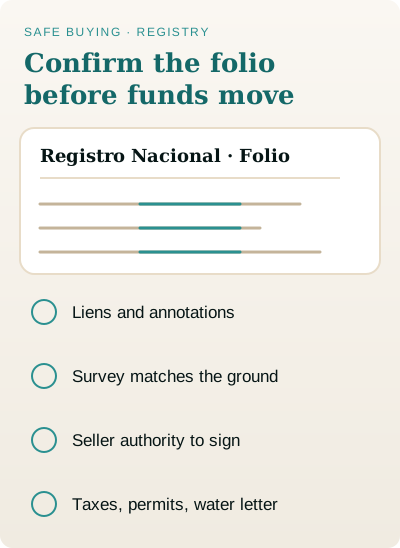
4. Finish due diligence before funds become non-refundable
A spotless folio at the Registro Nacional is necessary and not enough. Diligence should at least cover:
- A certified registry report (liens, annotations, easements) - The survey plan checked against the ground - The seller’s identity and authority (especially for a corporate seller) - Municipal taxes and building permits - A current water availability letter from AyA or the local ASADA when you plan to build - Titled land versus a Maritime Zone concession - A physical inspection of the home or lot
If something is still open at closing, negotiate a holdback, a credit, or a price cut in writing. Do not “sort it out later.”
Full checklist: What does due diligence cover before I buy?
5. Close by public deed and confirm registration
Closing is formal. The notary authorizes the escritura pública and presents it to the Registro Nacional. Ownership passes when the registry records the deed—not when you sign at the table.
After recording, enroll the property in the registry’s email alert (Alerta Registral) so a later filing does not arrive in silence. Then move utilities into the correct name and put insurance in place.
Much of this can be done remotely with a properly executed power of attorney, but the judgment calls still belong to you and to the lawyer who has read the folio. See the remote-purchase notes in How to buy property in Costa Rica.

Red Flags That Should Slow You Down
These are not exotic scams. They are ordinary shortcuts that turn expensive:
1. “Wire the deposit to my personal account.” Use SUGEF-regulated escrow instead. 2. One attorney for both sides. Conflict of interest is not a bargain. 3. No written purchase agreement, or terms that exist only in a chat thread. 4. Pressure to skip diligence because “another buyer is ready.” 5. Beachfront marketed as simple ownership without confirming titled land versus a concession. Read titled vs. concession. 6. Pre-construction deposits that sit with the developer, not in a supervised trust. See pre-construction risks. 7. An old water letter, or a promise to “get water later,” on a vacant lot you plan to build on. 8. A price that is too good to be true from someone with no track record in the community—especially a casual introduction with an unregistered parcel.
If a deal only works when you ignore the registry, the water letter, or regulated escrow, it is not a deal. It is a story.
What Safe Looks Like on Closing Day
On a clean file you should be able to answer yes to all of these:
- My attorney represents only me. - My deposit is in SUGEF-regulated escrow. - Diligence is finished, or open items are handled in the contract. - I know whether the land is titled or concession. - Funds move only under the escrow instructions, never to a personal account. - The deed will be presented for registration, and I will confirm the folio afterward.
None of that requires cynicism. It requires patience. The buyers who regret Guanacaste purchases are usually the ones who moved money before the file was ready. The buyers who sleep well are the ones who let an independent attorney finish the boring work first.
How I Help from Tamarindo and Playa Flamingo
My role as your RE/MAX Ocean Surf agent is local: community knowledge, honest pricing, and coordination with professionals who are not tied to the seller. Costa Rica does not issue a national real-estate license the way many U.S. states do, so ask about closings in the specific community you are buying—not a polished tour alone.
Start with the full buying guide, then use the due-diligence and how-to-buy FAQ pages linked above. When you are ready to look at a specific home on the Gold Coast, ask me to walk the file with you before anyone asks for a wire.
FAQ
Is it safe for a foreigner to buy property in Costa Rica?
Yes, for titled property outside the Maritime Zone rules that change beachfront ownership. Foreign buyers can hold titled land with a passport. Safety comes from process: your own attorney, SUGEF-regulated escrow, and finished diligence—not from nationality.
Do I need escrow, or can I pay the seller directly?
Use a SUGEF-registered escrow agent. Direct wires to a seller or a personal account remove the control that keeps money and title moving together. Escrow is the market standard on careful deals.
Can the seller’s attorney also represent me?
You should not rely on that. Hire counsel who acts only for you. A notary must authorize the deed; that is a different job from having a buyer’s lawyer.
When do I actually own the property?
When the public deed is recorded at the Registro Nacional. Signing day matters. Registration is what completes ownership.
What is the single biggest red flag?
Pressure to send money before diligence is done, especially to a personal account or a developer’s operating account. Pause and call your attorney.