Understanding the Maritime Zone (ZMT)
One of the most important legal concepts for coastal property buyers in Costa Rica is the Maritime Zone, or "Zona Marítimo-Terrestre" (ZMT). Understanding how it works is critical for waterfront property purchases.
What Is the Maritime Zone?
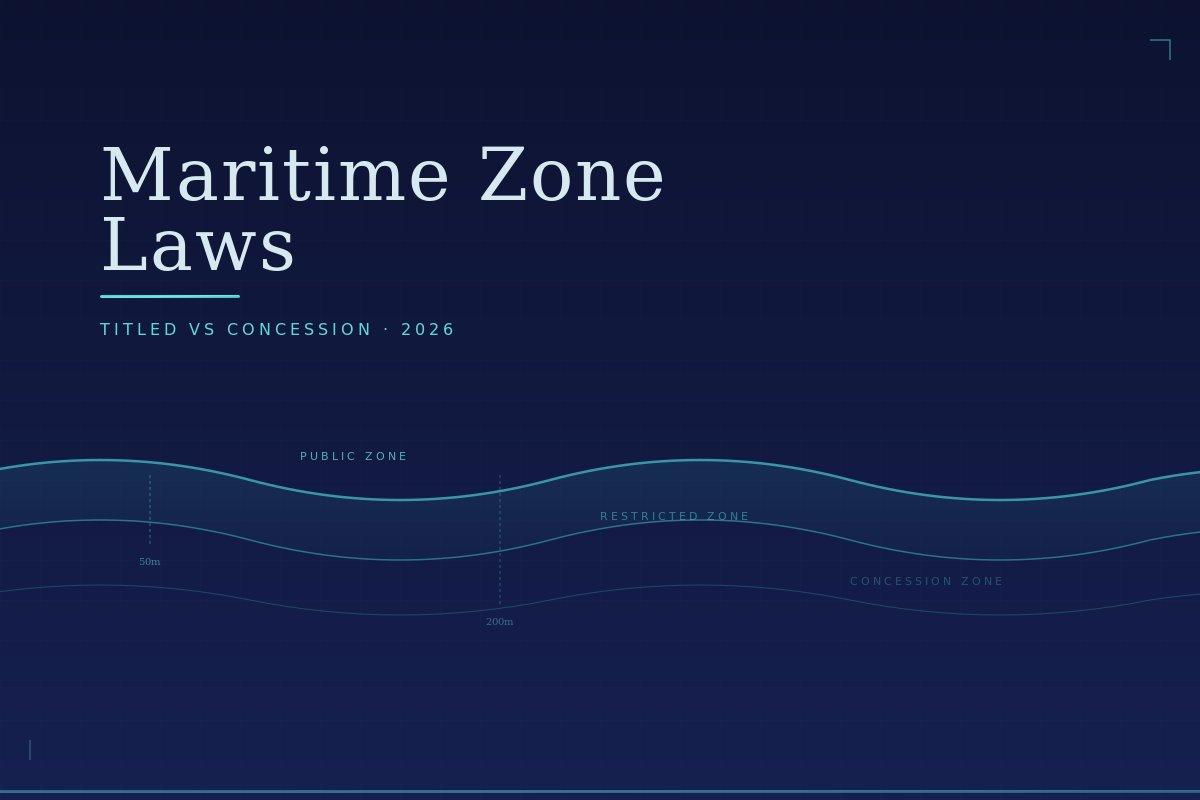
The Maritime Zone is a 200-meter-wide zone measured from the high tide line on all Costa Rican coastline. The ZMT extends inland 200 meters from the ocean at high tide. Any property within this zone has specific legal restrictions and ownership rules.
Foreign Ownership Restrictions
The key rule: Foreign individuals cannot hold direct title to land within the Maritime Zone. This is a constitutional restriction designed to prevent foreign nationals from owning Costa Rica's coastline.
However, there are exceptions:
1. Corporations
A Costa Rican corporation (even one 100% foreign-owned) can hold title to Maritime Zone land without restriction.
2. Concessions
Foreign individuals can hold a concession (concesión) from the Costa Rican government, which grants long-term use rights (typically 20–40 years, renewable).
3. Residency Status
Foreign nationals with certain residency statuses (pensionado, residente temporal) may have additional rights, though these vary.
Titled vs. Concession Property
Within the Maritime Zone, property falls into two categories:
Titled Property (Tierra Titulada)
Land with private title registered before specific dates (varies by region). These titles are considered valid and transferable. However, only corporations can hold direct title.
Most waterfront properties in established communities like Playa Flamingo and Reserva Conchal are titled property held by corporations.
Concession Property (Tierra en Concesión) Land held under government concession agreement. The concession grants use rights for a defined period (typically 20–40 years) and is renewable.
Concession properties are generally less expensive than titled property and are common in developing areas.
Advantages and Disadvantages
Titled Property via Corporation
Advantages: Permanent ownership, transferable, financeable by banks, no renewal requirement Disadvantages: Corporate overhead costs ($1,500–$3,000/year), complex transfer process, corporate ownership structure
Concession Property
Advantages: Lower purchase price, simpler individual ownership, no corporate fees Disadvantages: Time-limited rights, renewal uncertainty, potentially harder to finance, may be harder to sell
Corporate Ownership in Practice
Most high-end waterfront properties in Costa Rica are held by corporations for simplicity and protection.
When you buy a waterfront property, you may be purchasing shares in a corporation that owns the property, rather than purchasing property directly.
This is standard practice and provides liability protection in addition to enabling Maritime Zone ownership.
Your attorney will guide you through the corporate structure during the purchase process.
Properties Outside the Maritime Zone
Properties more than 200 meters from the high tide line are outside the Maritime Zone and can be owned directly by foreign individuals with no restrictions. The same rights apply as to Costa Rican citizens.
For properties just outside the ZMT, no corporate structure is required.
Tax and Legal Considerations
Both titled and concession property within the ZMT are subject to the same annual property taxes and transfer taxes as land outside the zone.
Rental income from ZMT properties is taxed identically to non-ZMT properties.
Consult with Your Attorney
Maritime Zone regulations can be complex, and specific applications vary by province and municipality. Always work with a Costa Rican attorney experienced in real estate law to understand your specific property's status and ownership options.
Chris Spears can connect you with trusted legal professionals who specialize in coastal property law.